JHS2 Mathematics · Term 3, Week 6
Position and Transformation
Lesson notes
Learning Objectives
Indicator: B8.3.3.1.1 - Understand rotation and identify real-life situations involving rotation.
By the end of the lesson, learners can:
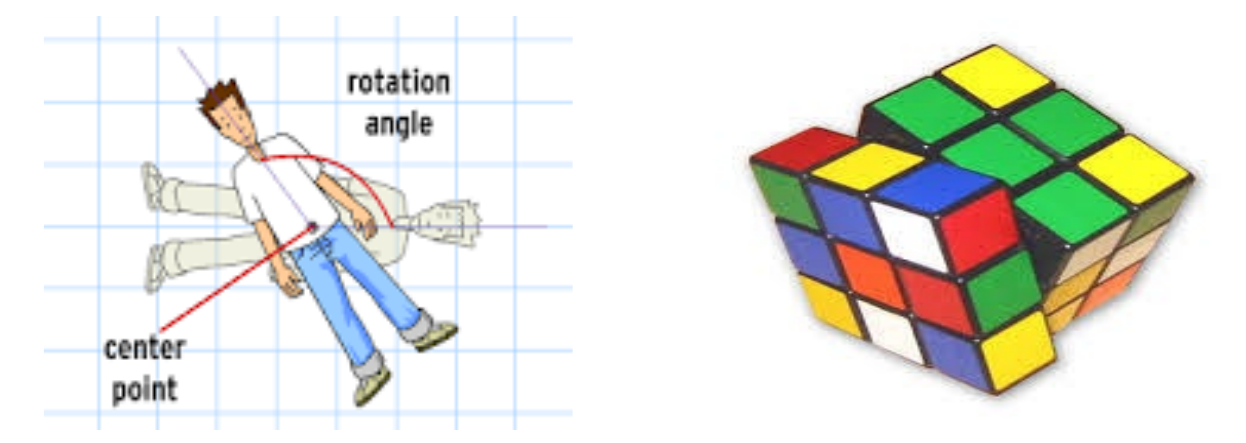
- Define rotation as a transformation that turns a shape around a fixed point called the centre of rotation.
- Identify and describe real-life situations involving rotation from their surroundings.
- Distinguish between clockwise and anti-clockwise rotational movement.
- Demonstrate a rotation by physically turning an object or shape through a given angle.
- Recognise that rotation preserves the size and shape of the object (the image is congruent to the original), without yet drawing images on a coordinate plane.
Sign in with your phone number to read the full note and download the GES plan - free.
Sign in with phone numberCurriculum details
- Strand
- Geometry and Measurement (Strand 3)
- Sub-strand
- Position and Transformation (3.3)
- Content standard
- B8.3.3.1 - Perform a single transformation (i.e. rotation) on a 2D shape using graph paper (including technology) and describe the properties of the image under the transformation (i.e. congruence)
- Indicator
- B8.3.3.1.1 - Understand rotation and identify real-life situations involving rotation.
- Suggested placement
-
Term 3, Week 6
(Week 30 of the year)
Our suggestion, laid out in curriculum order across three terms of twelve weeks. NaCCA does not fix the week, so follow your school's scheme of learning.
- Curriculum reference
-
Mathematics, Common Core Programme (JHS1-JHS3), 2023, p. 151
Transcribed from the official NaCCA publication. Check this page against the source.
Exemplars (from the NaCCA curriculum)
E.g.1. Identify examples of rotation situations in everyday life and the nature of rotational movements as clockwise and anti-clockwise.