JHS1 Mathematics · Term 2, Week 3
Patterns and Relations
Lesson notes
Learning Objectives
Indicator: B7.2.1.1.1 - Extend a given relation presented with and without symbolic materials and explain how each element differs from the preceding one.
By the end of the lesson, learners can:
- Extend a given symbolic relation (such as matchstick patterns) to at least two further terms and draw the next pattern.
- Extend a given numeric relation in a domain and co-domain table to find missing values.
- Explain in words how each new element of a relation differs from the element that came before it.
- State the constant difference (or “add on” rule) for a given relation and use it to predict at least three more terms.
- Create their own simple relation pattern and describe how it grows from one term to the next.
Sign in with your phone number to read the full note and download the GES plan - free.
Sign in with phone numberCurriculum details
- Strand
- Algebra (Strand 2)
- Sub-strand
- Patterns and Relations (2.1)
- Content standard
- B7.2.1.1 - Derive the rule for a set of points of a relation, draw a table of values to graph the relation in a number plane and make predictions about subsequent elements of the relation.
- Indicator
- B7.2.1.1.1 - Extend a given relation presented with and without symbolic materials and explain how each element differs from the preceding one.
- Suggested placement
-
Term 2, Week 3
(Week 15 of the year)
Our suggestion, laid out in curriculum order across three terms of twelve weeks. NaCCA does not fix the week, so follow your school's scheme of learning.
- Curriculum reference
-
Mathematics, Common Core Programme (JHS1-JHS3), 2023, p. 27
Transcribed from the official NaCCA publication. Check this page against the source.
Exemplars (from the NaCCA curriculum)
E.g.1 Extend a given symbolic relation.
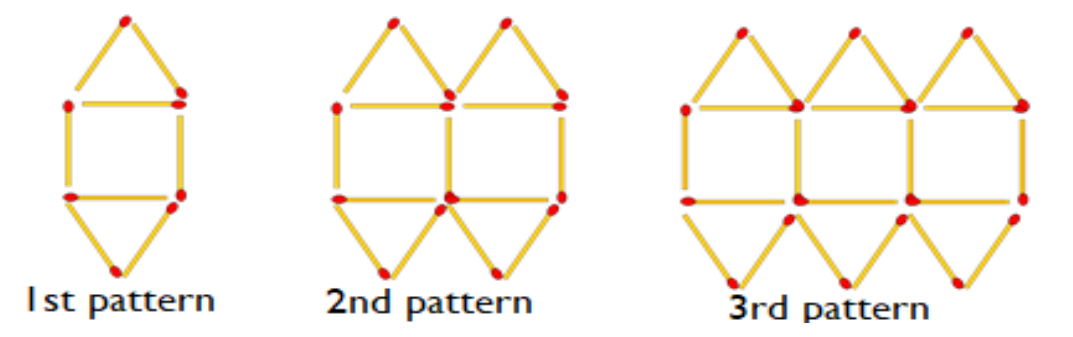
i. Study the pattern made with match sticks below and draw the fifth pattern.
ii. How does each pattern differ from the pattern that comes before it?
iii. Copy and complete the table for the number of sticks in each pattern.

Pattern No. 1 2 3 4 5 6 7 Number of sticks 8 15
E.g.2 Study the pattern of numbers below and complete table.

Domain 1 2 3 4 5 6 7 Co-domain 4 7 10 16
i. What are the missing numbers in the co-domain?
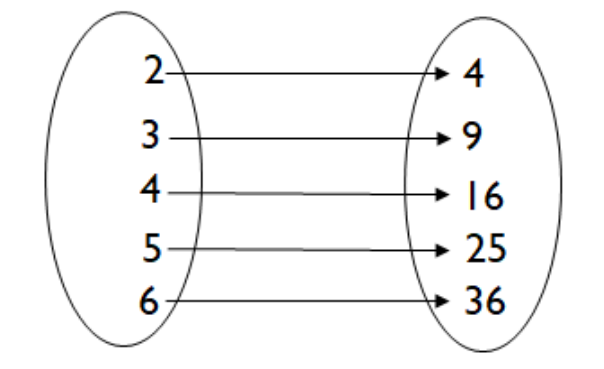
E.g.3 Extend a given number relation.
i. If the next number in the domain is 9, what will be the corresponding number in the co-domain?