B6 Mathematics · Term 1, Week 10
Number Operations
Lesson notes
Learning Objectives
Indicator: B6.1.2.3.1 - Determine basic division fact up to 81
By the end of the lesson, learners can:
- Recall division facts for quotients up to 81 when dividing by numbers from 1 to 9.
- Identify numbers divisible by 6, 8, 9 and 11 using simple divisibility tests.
- Apply known multiplication facts to find related division facts (the inverse relationship).
- Use a multiplication chart to find quotients and play games that require rapid recall of division facts.
- Justify whether a given number is divisible by 6, 8, 9 or 11 with clear reasoning.
Sign in with your phone number to read the full note and download the GES plan - free.
Sign in with phone numberCurriculum details
- Strand
- Number (Strand 1)
- Sub-strand
- Number Operations (1.2)
- Content standard
- B6.1.2.3 - Manipulate numbers, using basic division fact up to 144
- Indicator
- B6.1.2.3.1 - Determine basic division fact up to 81
- Suggested placement
-
Term 1, Week 10
(Week 10 of the year)
Our suggestion, laid out in curriculum order across three terms of twelve weeks. NaCCA does not fix the week, so follow your school's scheme of learning.
- Curriculum reference
-
Mathematics Curriculum for Primary Schools (Basic 4-6), 2019, p. 126
Transcribed from the official NaCCA publication. Check this page against the source.
Exemplars (from the NaCCA curriculum)
E.g. 1. Investigate numbers that are multiples of 6, 8, 9 and 11. How do you know a number is divisible by 6, 8, 9 and 11? (This is also known as the divisibility test).
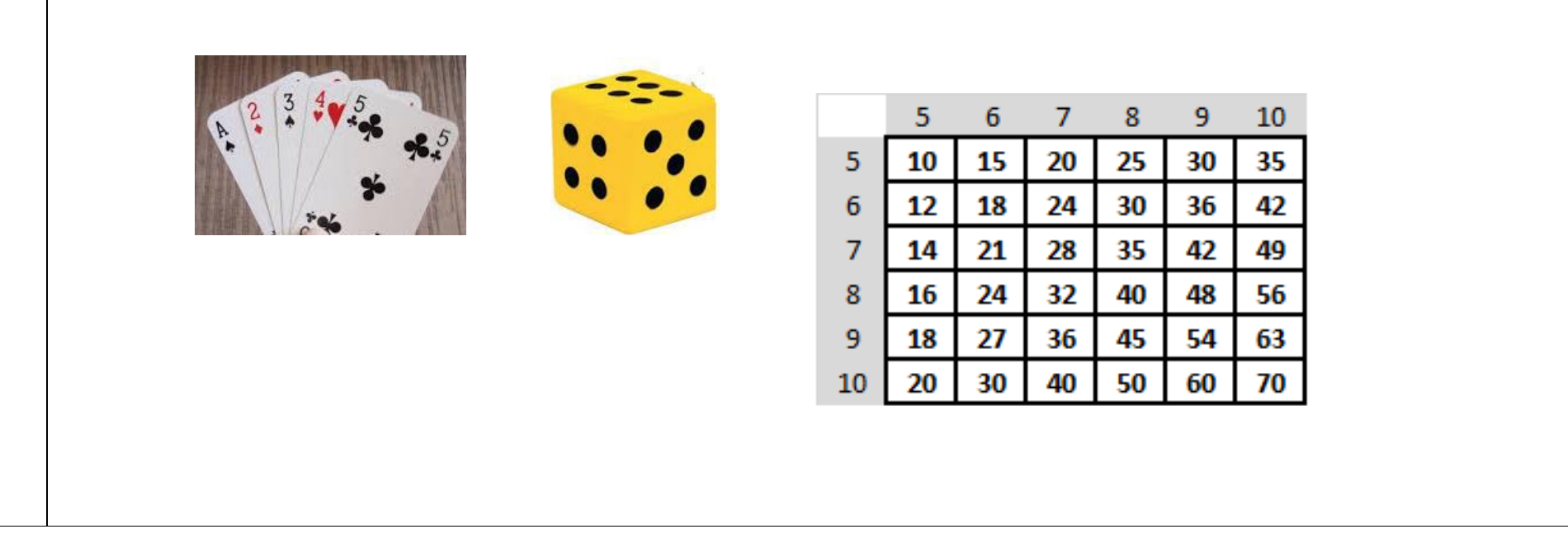
E.g. 2. Draw a 6 by 6 multiplication chart and use it as a game board to play the 3-in-a-line game with a pair of dice or playing cards. Players take turns in throwing a one dice and mark (or cover) a number that can be divided by the results (i.e. a quotient). The winner is the one who obtains three numbers in a line.