B4 Mathematics · Term 1, Week 9
Number Operations
Lesson notes
Learning Objectives
Indicator: B4.1.2.1.1 - Determine basic multiplication facts up to 12 × 12
By the end of the lesson, learners can:
- Use the intersection (legs and arms) model with straws or drawings to find the product of any two numbers from 1 to 12.
- Recall and state basic multiplication facts up to 12 × 12 accurately when prompted, with particular attention to the 4s, 5s, and 8s.
- Find doubles and squares of given numbers up to 12.
- Use skip counting in 4s, 5s, and 8s to determine multiplication facts.
- Play the “3-in-a-line” multiplication game using a 6 by 6 chart, demonstrating accurate product recognition for products between 25 and 144.
Sign in with your phone number to read the full note and download the GES plan - free.
Sign in with phone numberCurriculum details
- Strand
- Number (Strand 1)
- Sub-strand
- Number Operations (1.2)
- Content standard
- B4.1.2.1 - Recall basic multiplication fact up to 12 × 12
- Indicator
- B4.1.2.1.1 - Determine basic multiplication facts up to 12 × 12
- Suggested placement
-
Term 1, Week 9
(Week 9 of the year)
Our suggestion, laid out in curriculum order across three terms of twelve weeks. NaCCA does not fix the week, so follow your school's scheme of learning.
- Curriculum reference
-
Mathematics Curriculum for Primary Schools (Basic 4-6), 2019, p. 14
Transcribed from the official NaCCA publication. Check this page against the source.
Exemplars (from the NaCCA curriculum)
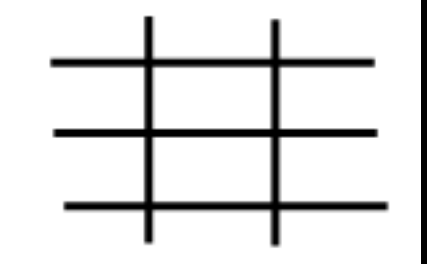
E.g. 1. To find 2 × 3 = ? Learners arrange 2 straws vertically (legs) and put across it with 3 horizontal ones (arms). Learners count the number of intersections
E.g. 2. Learners model different multiplication sentences, for example 3 × 4 . Learners mention the number of dots (intersections) for other learners to model fence Note: Alternatively, learners may draw vertical lines to represent the legs and horizontal lines across them to represent the arms and then count the number of intersections as the product
E.g. 3. Draw a 6 by 6 multiplication chart for the numbers 5 to 10 and use it as a game board to play the 3-in-a-line game with a pair of dice or playing cards. Players take turns in throwing a pair of dice and mark (or cover) the product made in a throw with his/her marker (or counter). The winner is the one who obtains three products in a line.

E.g. 4. Learners find doubles of given numbers; find squares of given numbers; and skip count in 4, 5, and 8