B4 Mathematics · Term 3, Week 8
Measurement -Time
Lesson notes
Learning Objectives
Indicator: B4.3.3.3.1 - Tell the time in hours and minutes in analogue and digital watches including 24-hour clocks
By the end of the lesson, learners can:
- Read and state the time shown on an analogue clock to the nearest 5 minutes (e.g., 3:25, 7:40).
- Read and state the time shown on a digital watch display (e.g., 4:15, 9:50) and match it to the same time on an analogue clock.
- Convert times between the 12-hour clock (e.g., 3:30 p.m.) and the 24-hour clock (e.g., 15:30) for common times in the school day.
- Sketch the face of an analogue clock and draw the hands to show a given time stated in hours and minutes.
- State and apply the relationships 60 seconds = 1 minute and 60 minutes = 1 hour when describing how long events take.
Sign in with your phone number to read the full note and download the GES plan - free.
Sign in with phone numberCurriculum details
- Strand
- Geometry and Measurement (Strand 3)
- Sub-strand
- Measurement -Time (3.3)
- Content standard
- B4.3.3.3 - Demonstrate understanding of time taken by events in minutes and hours
- Indicator
- B4.3.3.3.1 - Tell the time in hours and minutes in analogue and digital watches including 24-hour clocks
- Suggested placement
-
Term 3, Week 8
(Week 32 of the year)
Our suggestion, laid out in curriculum order across three terms of twelve weeks. NaCCA does not fix the week, so follow your school's scheme of learning.
- Curriculum reference
-
Mathematics Curriculum for Primary Schools (Basic 4-6), 2019, p. 43
Transcribed from the official NaCCA publication. Check this page against the source.
Exemplars (from the NaCCA curriculum)
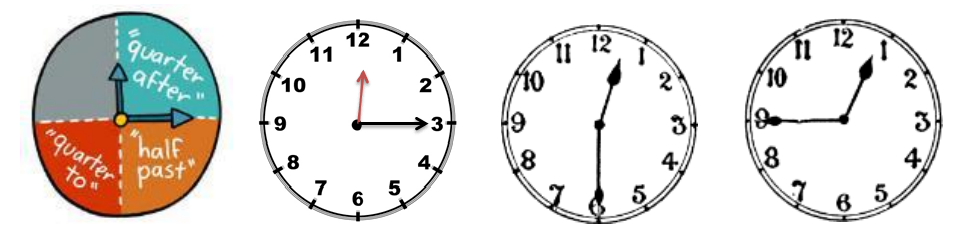
E.g .1 Use analogue clocks to tell time by keeping the hour hand on 12 and making jumps of 15(quarter past), 30(half past), 45(quarter to), and 60 (12 o'clock)
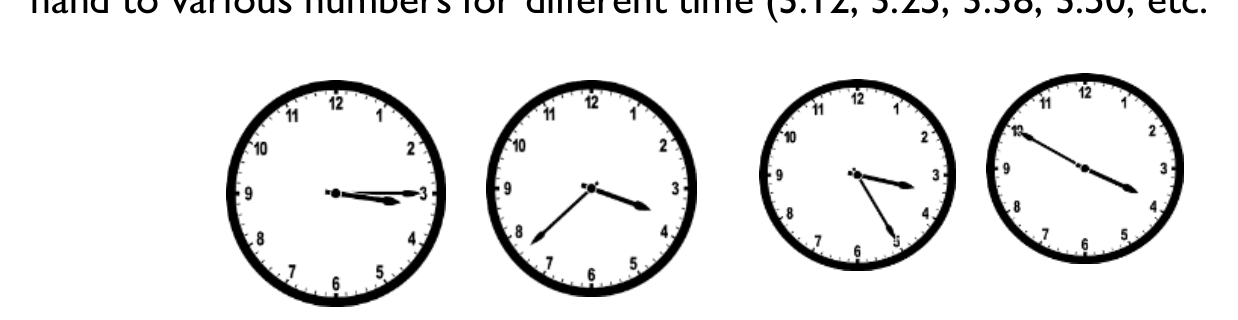
E.g. 2 Use analogue clocks to tell time by keeping the hour hand on any number say 3 and move the minutes hand to various numbers for different time (3:12, 3:25, 3:38, 3:50, etc.
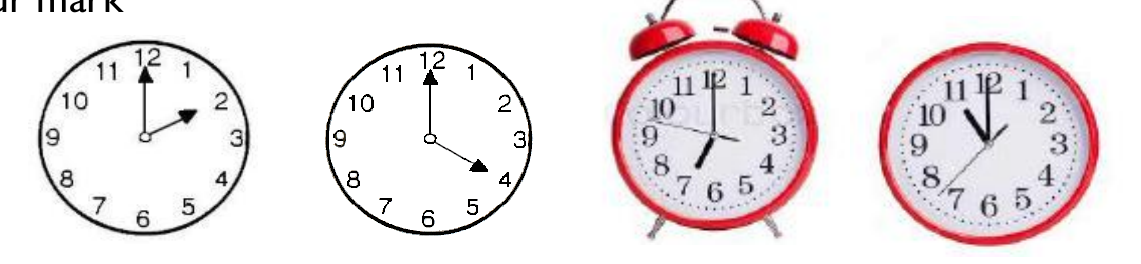
E.g. 3 Use analogue clocks to tell time by keeping the minutes hand on 12 and moving the hour hand to tell time at the hour mark
E.g .4 Pupils should draw/sketch the face of the clock to tell time given
E.g. 5 Pupils to explore the relationship in the units of time (i.e. 60 seconds = 1 minute; 60 minutes = 1hour)
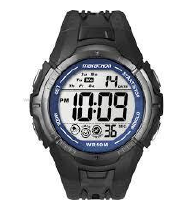
E.g. 6 Use digital watches to tell time. Pupils to observe the face of the digital watches and tell the time