JHS2 Mathematics · Term 3, Week 4
Measurement
Lesson notes
Learning Objectives
Indicator: B8.3.2.1.5 - Establish the relationship between the basic trigonometric ratios and solve problems involving right-angled triangles.
By the end of the lesson, learners can:
- Identify the opposite, adjacent and hypotenuse sides of a right-angled triangle relative to a given angle.
- Define the three primary trigonometric ratios: sine, cosine and tangent, as ratios of pairs of sides.
- Compute the value of sin X, cos X and tan X for a given angle in a right-angled triangle using side lengths.
- Explain the meaning of angle of elevation and angle of depression in real-life situations.
- Apply trigonometric ratios together with the Pythagoras theorem to solve problems involving right-angled triangles, including angles of elevation and depression.
Sign in with your phone number to read the full note and download the GES plan - free.
Sign in with phone numberCurriculum details
- Strand
- Geometry and Measurement (Strand 3)
- Sub-strand
- Measurement (3.2)
- Content standard
- B8.3.2.1 - Apply the Pythagoras theorem, the primary trigonometric ratios and the formulas for determining the area of a circle to solve real problems.
- Indicator
- B8.3.2.1.5 - Establish the relationship between the basic trigonometric ratios and solve problems involving right-angled triangles.
- Suggested placement
-
Term 3, Week 4
(Week 28 of the year)
Our suggestion, laid out in curriculum order across three terms of twelve weeks. NaCCA does not fix the week, so follow your school's scheme of learning.
- Curriculum reference
-
Mathematics, Common Core Programme (JHS1-JHS3), 2023, p. 145
Transcribed from the official NaCCA publication. Check this page against the source.
Exemplars (from the NaCCA curriculum)
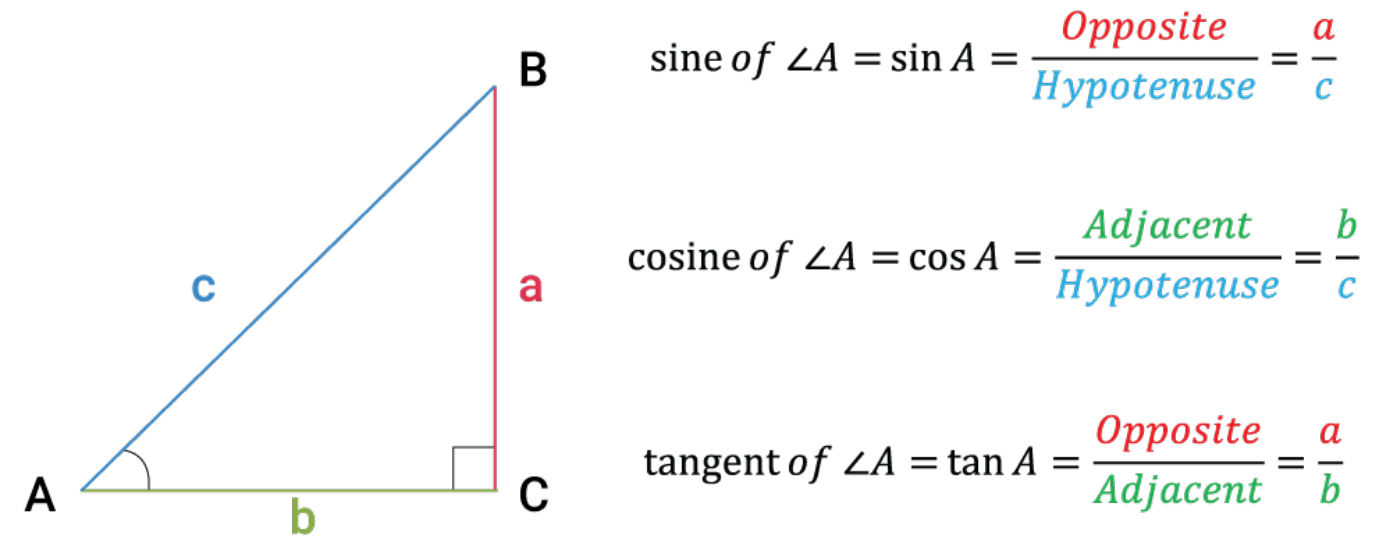
E.g.1 Identify and recognise the three primary trigonometric ratios.
i. Establish the sine, cosine and tangent of an angle in a right-angled triangle
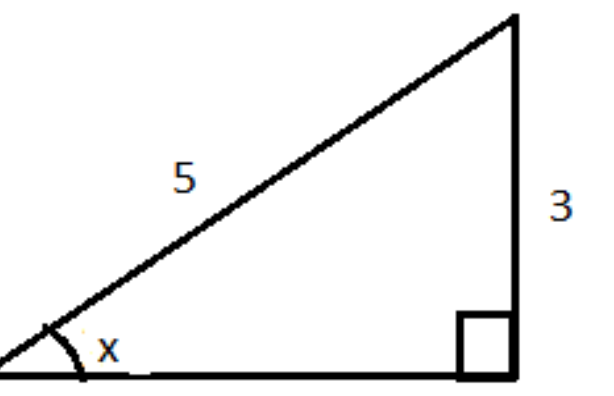
i. Find sin X, cos X and tan X in the diagram
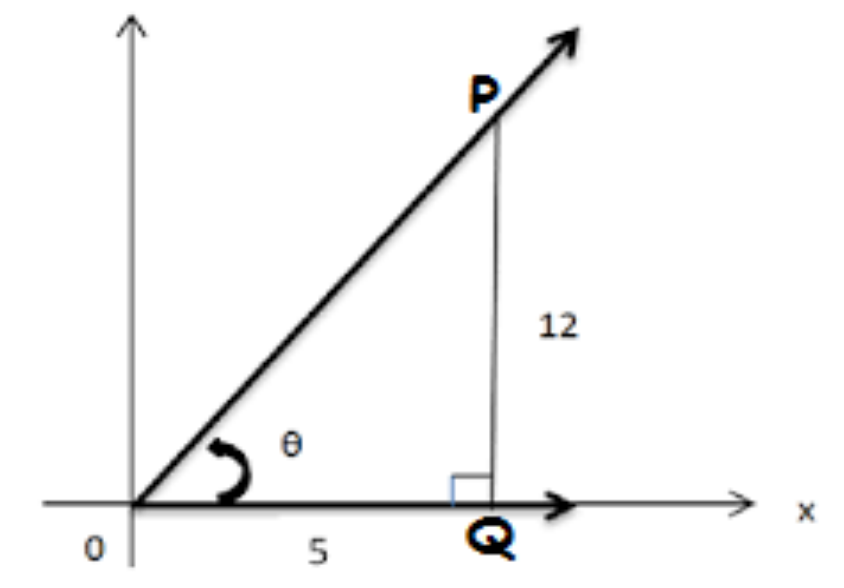
ii. Write two trig ratios of the angle marked θ in the diagram below:
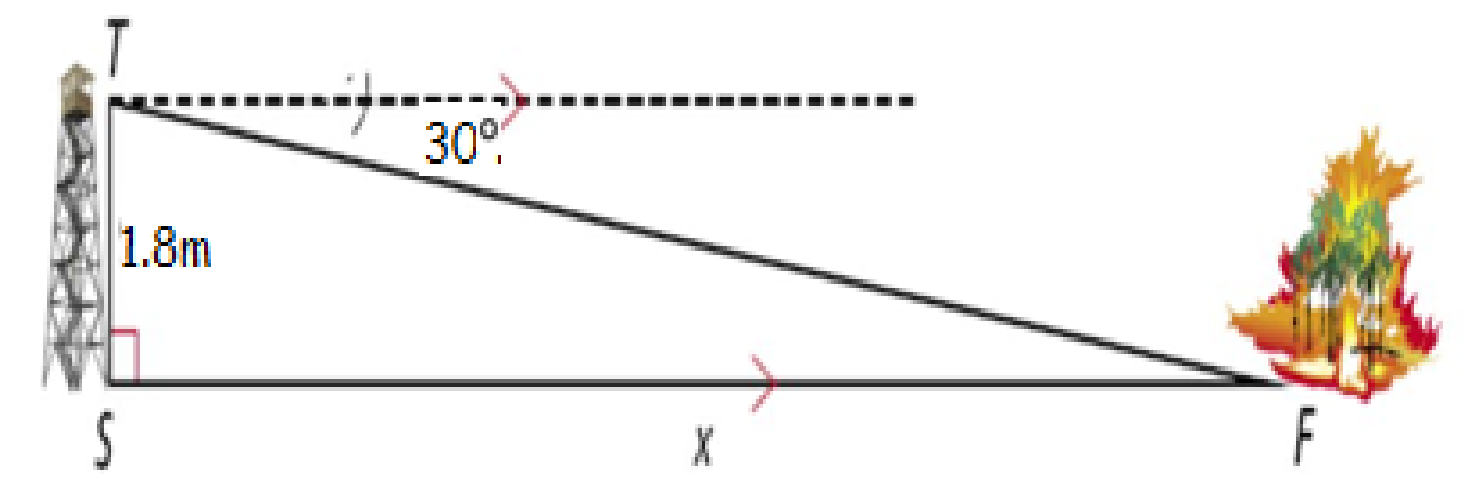
E.g. 2 Explain the angles of elevation and depression in real life situations.
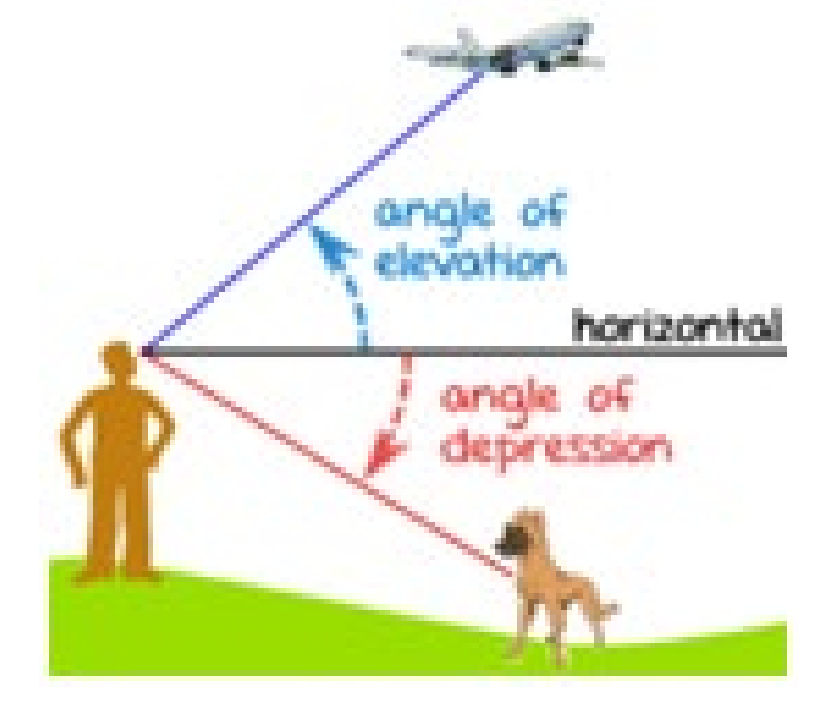
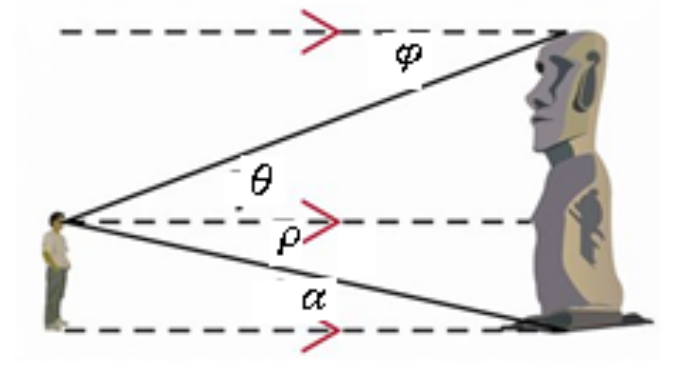
E.g.3 Use trig ratios and the Pythagoras theorem to solve problems involving angles of elevation and depression.
i. A hunter, on top of a tower, sees a fire at an angle of depression of 30˚. The height of the tower is 18m. What is the distance between the fire and the hunter? Round off your answer to 2 significant figures.