B4 Mathematics · Term 2, Week 3
Fractions
Lesson notes
Learning Objectives
Indicator: B4.1.3.2.3 - Provide examples of where fractions are used
By the end of the lesson, learners can:
- Identify and name at least three real-life situations in Ghana where fractions such as halves, quarters, and eighths are used.
- Explain and act out a scenario involving fraction use, such as selling oil by the half-litre or sharing a cake into eighths.
- Read and state times using “half past” and “quarter past” or “quarter to” when shown a clock face.
- Interpret a simple circle graph divided into halves, quarters, or eighths and answer questions about the information shown.
- Justify their answers by explaining why a particular fraction name (for example, one-quarter) is correct for a given situation.
Sign in with your phone number to read the full note and download the GES plan - free.
Sign in with phone numberCurriculum details
- Strand
- Number (Strand 1)
- Sub-strand
- Fractions (1.3)
- Content standard
- B4.1.3.2 - Demonstrate an understanding of strategies for comparing, adding and subtracting fractions (same denominator, or one being a multiple of the others)
- Indicator
- B4.1.3.2.3 - Provide examples of where fractions are used
- Suggested placement
-
Term 2, Week 3
(Week 15 of the year)
Our suggestion, laid out in curriculum order across three terms of twelve weeks. NaCCA does not fix the week, so follow your school's scheme of learning.
- Source document note
-
The official curriculum document has a fault in this entry, so the curriculum text above is transcribed exactly as printed:
- exemplars - p.24
- Curriculum reference
-
Mathematics Curriculum for Primary Schools (Basic 4-6), 2019, p. 24
Transcribed from the official NaCCA publication. Check this page against the source.
Exemplars (from the NaCCA curriculum)
E.g. 1. Discuss the contexts below in which fractions are used in real life and provide materials for pupils to act them out
- Selling liquids - oil, kerosene, drinks, etc.
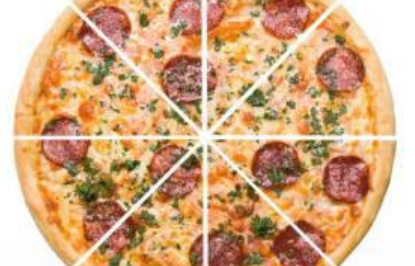
- Sharing pizza or birthday cake - half, quarter, eighths, etc.
- Buying objects in packets - egg, drinks, (half crate),
- Buying cloth for sewing dresses - half, one-fourths or quarter, etc.
E.g. 2. Tell the time by half/quarter past, and half/quarter to. Draw clock-faces with times (i.e. half/quarter past or to) for pupils to read the time
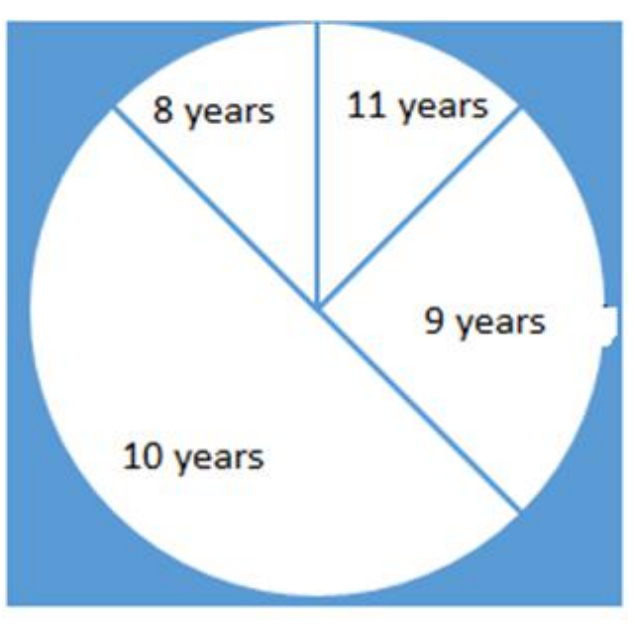
E.g. 3. Drawing circle graphs that represent halves, fourths and eighths. The graph shows the ages of pupils in Primary 4. If there are 40 pupils in the class, ask questions for pupils to interpret the graph
The document skips indicator B4.1.3.2.2: content standard B4.1.3.2 runs B4.1.3.2.1 (printed p.23) then B4.1.3.2.3 (printed p.24).