B1 Mathematics · Term 2, Week 8
Fractions
Lesson notes
Learning Objectives
Indicator: B1.1.3.1.1 - Understand the fraction one-half as the quantity obtained by taking 1 part when a whole is partitioned into two equal parts
By the end of the lesson, learners can:
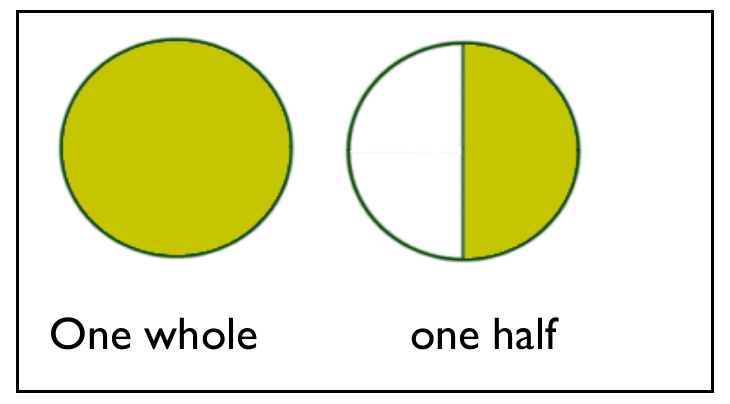
- Partition a concrete object (such as paper, rope, or a fruit) into two equal parts and identify one of the parts as a half.
- Shade or identify one of two equal parts in a given pictorial representation to show the fraction one-half.
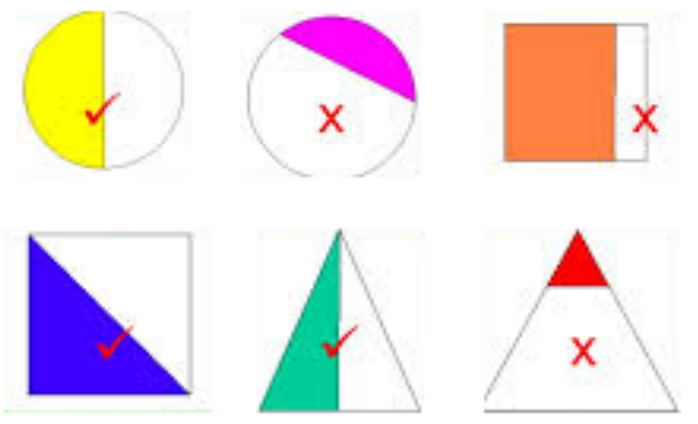
- Sort pictures into groups of those that show halves and those that do not show halves, explaining their reasoning.
- Justify why a particular object has or has not been cut into halves using the idea of equal parts.
- Use the language “one-half” and “two equal parts” correctly when talking about shared objects.
Sign in with your phone number to read the full note and download the GES plan - free.
Sign in with phone numberCurriculum details
- Strand
- Number (Strand 1)
- Sub-strand
- Fractions (1.3)
- Content standard
- B1.1.3.1 - Develop an understanding of halves using concrete and pictorial representations [Exclude notation here]
- Indicator
- B1.1.3.1.1 - Understand the fraction one-half as the quantity obtained by taking 1 part when a whole is partitioned into two equal parts
- Suggested placement
-
Term 2, Week 8
(Week 20 of the year)
Our suggestion, laid out in curriculum order across three terms of twelve weeks. NaCCA does not fix the week, so follow your school's scheme of learning.
- Curriculum reference
-
Mathematics Curriculum for Primary Schools (Basic 1-3), 2019, p. 11
Transcribed from the official NaCCA publication. Check this page against the source.
Exemplars (from the NaCCA curriculum)
E.g. 1. Use concrete objects to explain the fraction half as the quantity obtained by taking 1 part when a whole object is partitioned into two equal parts
E.g. 2. Use pictorial representations to explain the fraction half as the quantity obtained by taking 1 part when a whole object is partitioned into two equal parts
E.g. 3. Use pictorial representations to help learners sort fractions into those that are halves and those that are not halves