JHS1 Physical Education And Health · Term 1, Week 4
First Aid, Injury Prevention and Management
Lesson notes
Learning Objectives
Indicator: B7.1.3.1.1
By the end of the lesson, learners can:
- Define first aid and describe its scope and purpose in the context of sports and physical activity.
- Identify at least five common injuries related to sports and physical activity, including cuts, dislocation, and fracture.
- Classify common sports injuries as either minor or major, giving reasons for their classification.
- Analyse and explain at least three causes of common sports injuries, such as lack of adequate warm-up, inappropriate footwear, and faulty equipment.
- Describe the basic international procedures for managing sports-related injuries (wounds and fractures) using the principles learned in this lesson.
Sign in with your phone number to read the full note and download the GES plan - free.
Sign in with phone numberCurriculum details
- Strand
- Health Education (Strand 1)
- Sub-strand
- First Aid, Injury Prevention and Management (1.3)
- Content standard
- B7.1.3.1 - Demonstrate understanding of first aid, causes, prevention and management of common injuries in sports and physical activity.
- Indicator
- B7.1.3.1.1 - Describe first aid and evaluate causes of common injuries related to sports and physical activity.
- Suggested placement
-
Term 1, Week 4
(Week 4 of the year)
Our suggestion, laid out in curriculum order across three terms of twelve weeks. NaCCA does not fix the week, so follow your school's scheme of learning.
- Curriculum reference
-
Physical Education and Health, Common Core Programme (JHS1-JHS3), 2023, p. 4
Transcribed from the official NaCCA publication. Check this page against the source.
Exemplars (from the NaCCA curriculum)
1. In small groups, discuss and assess the scope of first aid as applied to sports and physical activity
2. Identify common injuries related to sports and physical activity, e.g. cuts, dislocation, fracture etc.
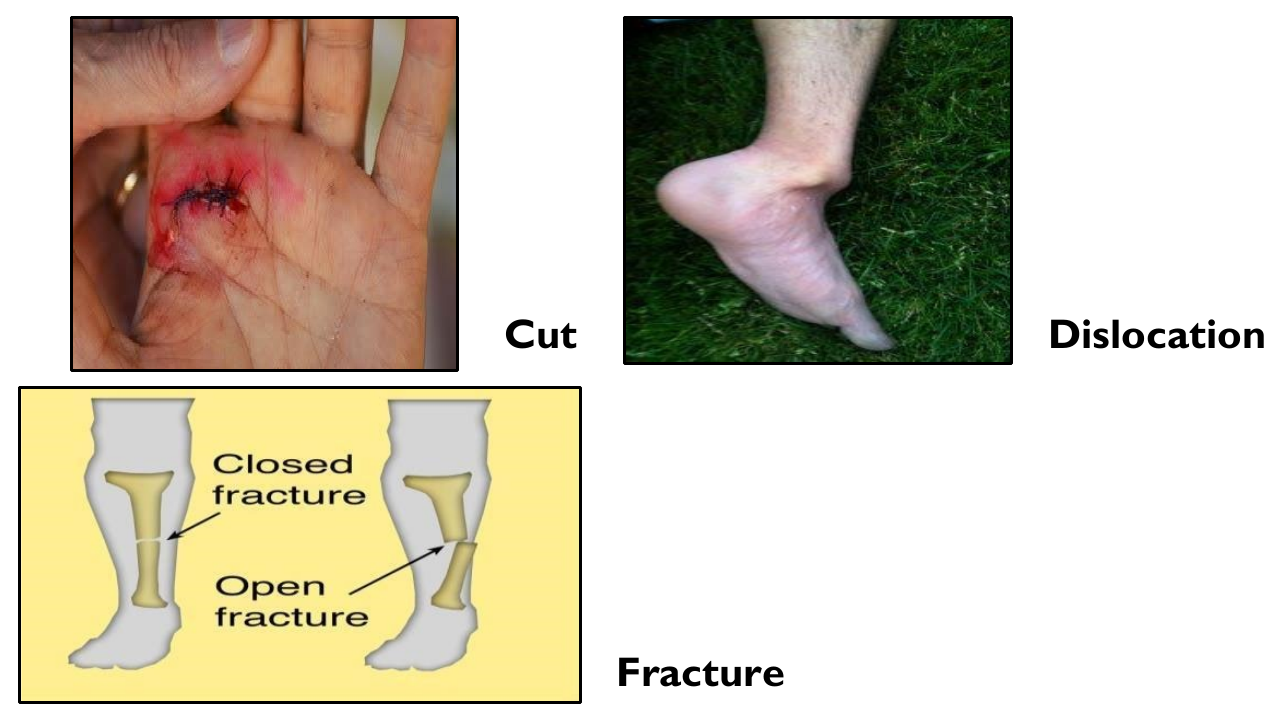
Cut Dislocation
Fracture
3. In groups, classify various injuries as either a minor or a major one.
4. Analyse the causes of the common injuries associated with physical activity. E.g., lack of adequate warm-up, inappropriate footwear, and equipment, etc.
5. Demonstrate international procedures of managing physical activity and sports related injuries (wounds, fractures etc.).