B4 Mathematics · Term 1, Week 7
Counting, Representation & Cardinality
Lesson notes
Learning Objectives
Indicator: B4.1.1.3.6 - Represent square numbers using factors
By the end of the lesson, learners can:
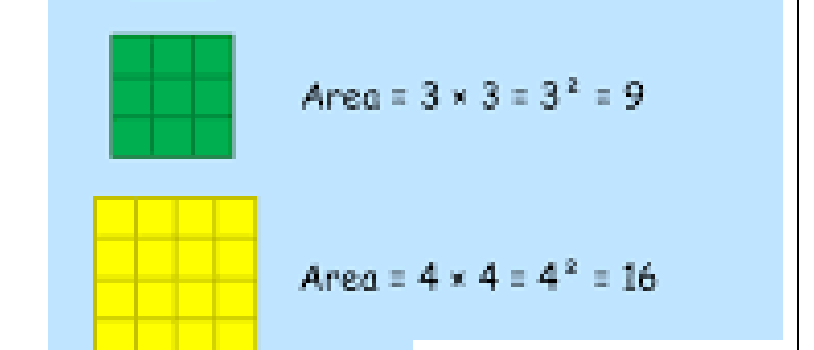
- Draw squares with sides of 1, 2, 3, and 4 units on squared paper and state the area of each square as a square number.
- Identify the factors of square numbers, including 1, 4, 9, 16, and 144, and explain that a square number is formed when a number is multiplied by itself.
- Write square numbers in index form, such as 3 squared = 3² = 9, and read the notation correctly.
- Use factor pairs to verify whether a given number is a square number by checking if one factor pair consists of two equal numbers.
- Continue a pattern of square numbers and justify their reasoning, using factors to show why 144 is a square number.
Sign in with your phone number to read the full note and download the GES plan - free.
Sign in with phone numberCurriculum details
- Strand
- Number (Strand 1)
- Sub-strand
- Counting, Representation & Cardinality (1.1)
- Content standard
- B4.1.1.3 - Demonstrate an understanding of factors, multiples and squared numbers
- Indicator
- B4.1.1.3.6 - Represent square numbers using factors
- Suggested placement
-
Term 1, Week 7
(Week 7 of the year)
Our suggestion, laid out in curriculum order across three terms of twelve weeks. NaCCA does not fix the week, so follow your school's scheme of learning.
- Curriculum reference
-
Mathematics Curriculum for Primary Schools (Basic 4-6), 2019, p. 12
Transcribed from the official NaCCA publication. Check this page against the source.
Exemplars (from the NaCCA curriculum)
E.g. 1 Learners draw a square whose side is 1 unit by 1 unit and determine the area; repeat the activity for a 2 unit, 3 unit and 4 unit squares.
E.g. 2 Learners work in groups to continue the pattern to include the factors of 144. (Key Concept: when a number has been multiplied by itself we say the answer is a square number hence 1 × 1 = 1; 2 × 2 = 4; 3 × 3 = 9 and we can write three squared as 3 × 3 = 3 2 )