B4 Mathematics · Term 3, Week 2
2D and 3D Shapes
Lesson notes
Learning Objectives
Indicator: B4.3.1.1.1 - Complete drawings of shapes to make them symmetrical
By the end of the lesson, learners can:
- Identify the line of symmetry on an incomplete 2D shape and state whether it is a vertical, horizontal or diagonal line.
- Complete a given half of a 2D shape on a grid or graph sheet so that the finished shape is symmetrical about the marked line.
- Check their completed drawings by folding along the line of symmetry or by counting squares to confirm both sides match exactly.
- Justify why their completed drawing is symmetrical, using precise language such as “both sides are equal” or “the line divides the shape into two matching halves.”
- Work collaboratively in pairs or small groups to complete symmetrical drawings and give constructive feedback on each other’s work.
Sign in with your phone number to read the full note and download the GES plan - free.
Sign in with phone numberCurriculum details
- Strand
- Geometry and Measurement (Strand 3)
- Sub-strand
- 2D and 3D Shapes (3.1)
- Content standard
- B4.3.1.1 - Identify the lines of symmetry of regular and irregular 2D shapes
- Indicator
- B4.3.1.1.1 - Complete drawings of shapes to make them symmetrical
- Suggested placement
-
Term 3, Week 2
(Week 26 of the year)
Our suggestion, laid out in curriculum order across three terms of twelve weeks. NaCCA does not fix the week, so follow your school's scheme of learning.
- Curriculum reference
-
Mathematics Curriculum for Primary Schools (Basic 4-6), 2019, p. 36
Transcribed from the official NaCCA publication. Check this page against the source.
Exemplars (from the NaCCA curriculum)
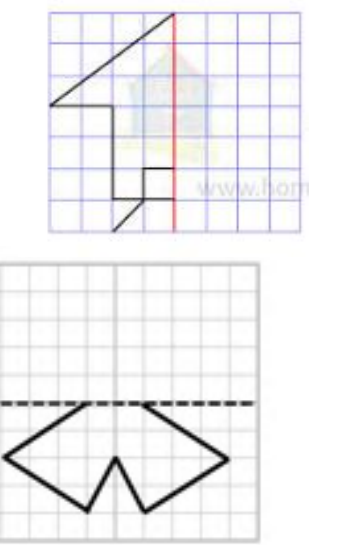
E.g. 1. Give learners graph sheets to copy the incomplete 2D shape and it complete to make a symmetrical picture
E.g. 2. Give learners photocopied worksheets with several incomplete 2D shapes to complete with marked line of symmetry to complete the drawing.