B1 Mathematics · Term 3, Week 2
2D and 3D Shapes
Lesson notes
Learning Objectives
Indicator: B1.3.1.1.1 - Distinguish between attributes that define a two-dimensional figure or three-dimensional figure and attributes that do not define the shape
By the end of the lesson, learners can:
- Identify 2D shapes (triangles, squares, rectangles, circles) on the surfaces of 3D objects (cubes, cylinders, spheres, rectangular prisms) found in the classroom and around the school compound.
- State the defining attributes of a given 2D shape or 3D object (for example, a triangle is closed and has three sides) and distinguish these from non-defining attributes such as colour, size, or orientation.
- Sort a mixed set of 2D shapes and 3D objects using a single criterion (for example, shape or size) and explain the sorting rule they used.
- Find parts of real 3D objects in the environment that match a given 2D shape (for example, the top of a can matches a circle).
- Build a composite 2D shape by combining smaller 2D shapes and describe the shapes they used to make it.
Sign in with your phone number to read the full note and download the GES plan - free.
Sign in with phone numberCurriculum details
- Strand
- Geometry and Measurement (Strand 3)
- Sub-strand
- 2D and 3D Shapes (3.1)
- Content standard
- B1.3.1.1 - Analyse attributes of two-dimensional shapes and three-dimensional objects to develop general concept about their properties
- Indicator
- B1.3.1.1.1 - Distinguish between attributes that define a two-dimensional figure or three-dimensional figure and attributes that do not define the shape
- Suggested placement
-
Term 3, Week 2
(Week 26 of the year)
Our suggestion, laid out in curriculum order across three terms of twelve weeks. NaCCA does not fix the week, so follow your school's scheme of learning.
- Curriculum reference
-
Mathematics Curriculum for Primary Schools (Basic 1-3), 2019, p. 15
Transcribed from the official NaCCA publication. Check this page against the source.
Exemplars (from the NaCCA curriculum)
Display 2D cut out shapes and 3D objects and have learners:
E.g. 1. Identify 2D shapes (triangles, squares, rectangles, circles) on the surfaces of 3D objects (cubes, cylinders, spheres, rectangular prisms) in the classroom or beyond; Identify what features define a shape or an object (e.g. triangles are closed and have three sides) and other features (colour, orientation or size)
E.g. 2. Sort a given set of 2D shapes and 3D objects using a given single feature or criteria (size, shape, etc.) and explain the sorting rule, feature or criteria used to sort them; Describe the difference between two given pre-sorted sets of familiar 3D objects or 2D shapes and the feature or criteria used to sort them
E.g. 3. Identify 3D objects in the environment that have parts similar to a given 2D shape (e.g., find the parts of a can or bucket that are similar to a circle)
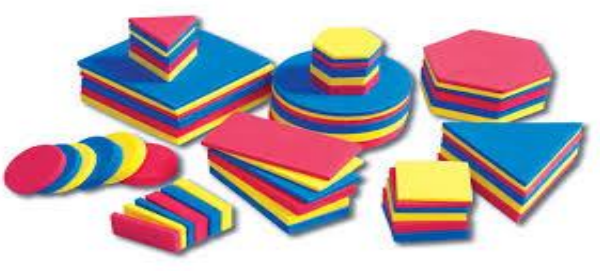
E.g. 4. Create a composite 2D shape from 2D shapes (i.e., build a new shape using triangle, circles, rectangles, or squares, or build a rectangle using squares or a square using triangles etc.) and describe it. (Make several of the logic block set below with card or plywood and paint them)