B5 Mathematics · Term 1, Week 5
Counting, Representation & Cardinality
Lesson notes
Learning Objectives
Indicator: B5.1.1.3.1 - Identify the factors of whole numbers 1 - 100
By the end of the lesson, learners can:
- Define a factor of a whole number in their own words as a number that divides the given number exactly without leaving a remainder.
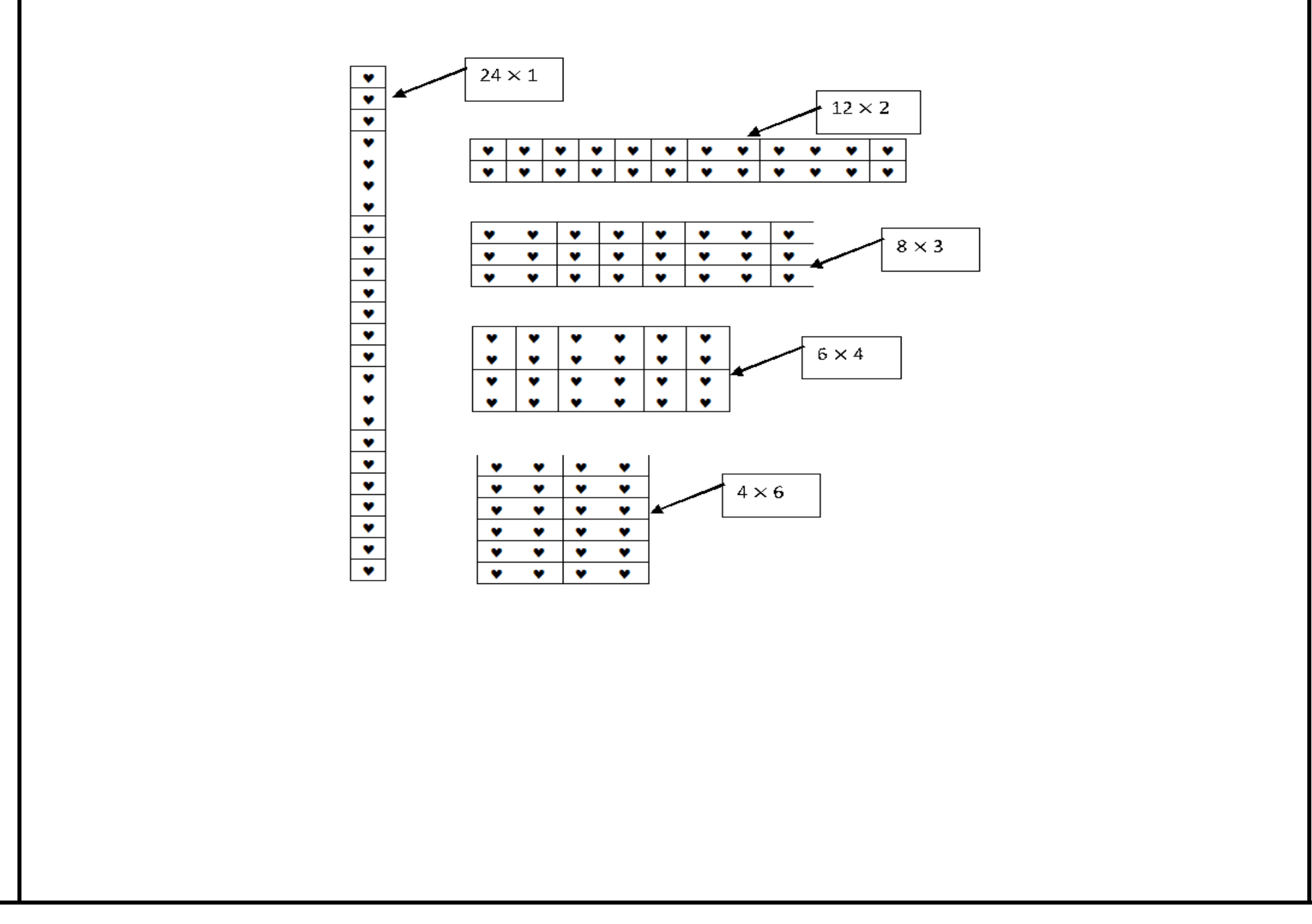
- Use arrays of objects (counters, bottle tops, seeds) to find all factor pairs of whole numbers from 1 to 100.
- List the complete set of factors for any given whole number between 1 and 100, writing them in ascending order.
- Identify which numbers from 1 to 100 have exactly two factors (prime) and which have more than two factors (composite), using factor lists they have built.
- Justify their answers by explaining, verbally or in writing, why a particular number is or is not a factor of another number.
Sign in with your phone number to read the full note and download the GES plan - free.
Sign in with phone numberCurriculum details
- Strand
- Number (Strand 1)
- Sub-strand
- Counting, Representation & Cardinality (1.1)
- Content standard
- B5.1.1.3 - Demonstrate an understanding of factors, multiples of numbers including composite, even, odd and prime numbers from 1 to 100
- Indicator
- B5.1.1.3.1 - Identify the factors of whole numbers 1 - 100
- Suggested placement
-
Term 1, Week 5
(Week 5 of the year)
Our suggestion, laid out in curriculum order across three terms of twelve weeks. NaCCA does not fix the week, so follow your school's scheme of learning.
- Curriculum reference
-
Mathematics Curriculum for Primary Schools (Basic 4-6), 2019, p. 60
Transcribed from the official NaCCA publication. Check this page against the source.
Exemplars (from the NaCCA curriculum)
E.g. 1 Ask learners to use different arrangements of arrays of objects to find factors of whole numbers 1 - 100. For instance the factors of 24 can be obtained from the following arrays of objects.
E.g. 2 Ask learner to collect from the arrays, pairs of number as the factors of the given number, 24. Hence the set of factors of 24 = {1, 2, 3, 4, 6, 8, 12, 24}