JHS1 Mathematics · Term 3, Week 2
Measurement
Lesson notes
Learning Objectives
Indicator: B7.3.2.1.2 - Use the relationships between the diameter and the circumference to deduce the formula for finding the circumference of a circle and use it to solve problems.
By the end of the lesson, learners can:
- Derive the formula C = π × d for the circumference of a circle by calculating the ratio of circumference to diameter for measured circular objects.
- State the value of π as approximately 22/7 or 3.142 and explain that it is the constant ratio of circumference to diameter for every circle.
- Use the formula C = πd to calculate the circumference of a circle when the diameter is given.
- Use the formula C = 2πr to calculate the circumference of a circle when the radius is given.
- Solve word problems involving circumference in everyday Ghanaian situations, choosing the correct formula and rounding answers appropriately.
Sign in with your phone number to read the full note and download the GES plan - free.
Sign in with phone numberCurriculum details
- Strand
- Geometry and Measurement (Strand 3)
- Sub-strand
- Measurement (3.2)
- Content standard
- B7.3.2.1 - Demonstrate the ability to find the perimeter of plane shapes including circles using the concept of pi (π) to find the circumference of a circle.
- Indicator
- B7.3.2.1.2 - Use the relationships between the diameter and the circumference to deduce the formula for finding the circumference of a circle and use it to solve problems.
- Suggested placement
-
Term 3, Week 2
(Week 26 of the year)
Our suggestion, laid out in curriculum order across three terms of twelve weeks. NaCCA does not fix the week, so follow your school's scheme of learning.
- Curriculum reference
-
Mathematics, Common Core Programme (JHS1-JHS3), 2023, p. 60
Transcribed from the official NaCCA publication. Check this page against the source.
Exemplars (from the NaCCA curriculum)
E.g.1: Identify the name the parts of a circle - radius, diameter, circumference, arc, sector,
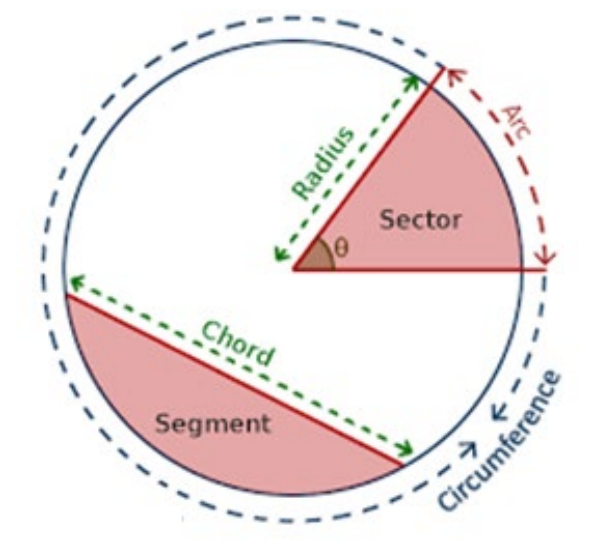
etc.
E.g.2: Measure the radius, diameter and circumference of circular objects like base or cross section of cylindrical objects like cans, tyres, bowls, etc., roundabouts, etc.
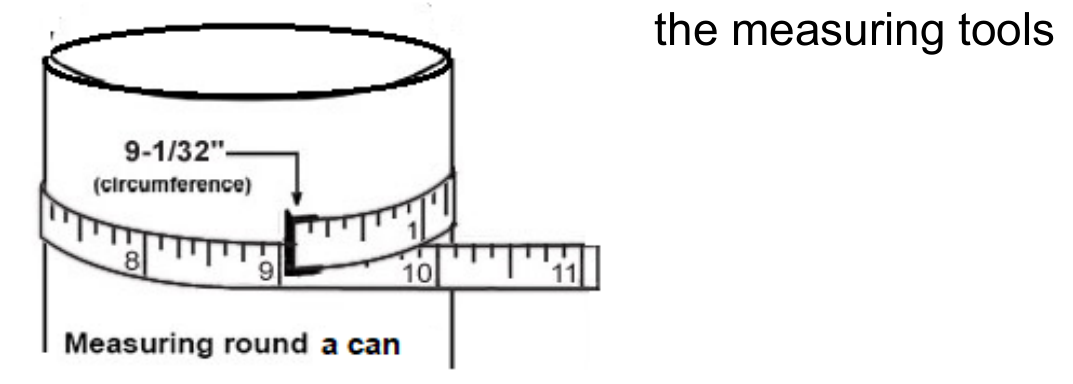
and describe the measuring tools used.
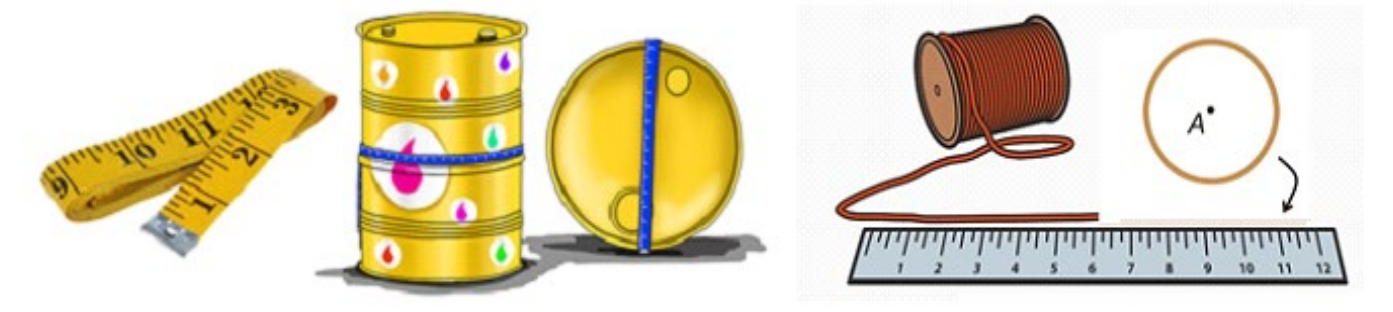
E.g.3: Explain the relationship between the diameter and circumference of a circle by:
i. Recording the measured diameter and circumference of various circles;
ii. Completing the table for the measured values; and
iii. Observing the results of c ÷ d.
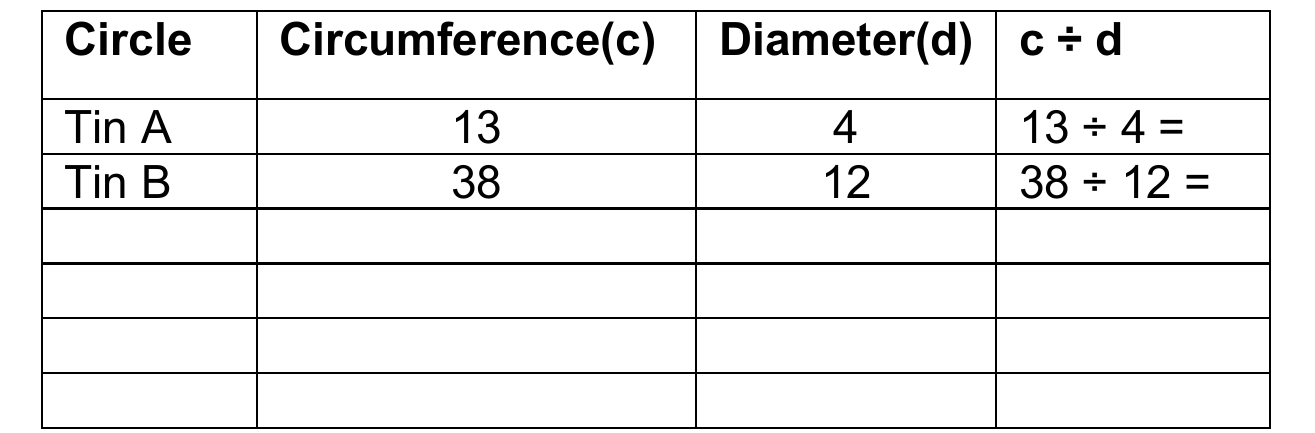
Circle Circumference(c) Diameter(d) c ÷ d Tin A 13 4 13 ÷ 4 = Tin B 38 12 38 ÷ 12 =
iv. Conclude that the result of c ÷ d or the ratio of the circumference of a circle to its diameter is named π (and pronounced pi). The ratio itself is approximately 22 or 3.141592+. [Read more on the 7
internet about the pi - who discovered it, and its value].
E.g.4: Use the relationship between the diameter and circumference of a circle (i.e. π = C = C ) to solve problems. D 2r
i. The radius of a circle is 140 cm. What is the (a) diameter (b) circumference? [Take π = 22 ] 7
ii. Find the circumference of the circles below whose radii are given and round your answer to the nearest tenth [take π = 3.142]: