B2 Mathematics · Term 2, Week 1
Number Operations (Addition, Subtraction, Multiplication and Division)
Lesson notes
Learning Objectives
Indicator: B2.1.2.4.2 - Use personal strategies to add and subtract within 100
By the end of the lesson, learners can:
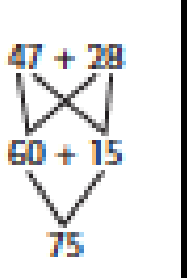
- Decompose two-digit numbers into tens and ones to add within 100 using partial sums (e.g., 28 + 47 = 20 + 40 + 8 + 7 = 75).
- Use the “friendly jumps” strategy to add by chunking one number into tens and ones (e.g., 26 + 32 = 26 + 10 + 10 + 10 + 2 = 58).
- Apply the “moving parts” strategy by transferring a small amount from one number to another to create friendlier numbers (e.g., 29 + 56 = 30 + 55 = 85).
- Use the compensation strategy by adding a friendly amount and then subtracting what was added (e.g., 26 + 39 = 26 + 40 - 1 = 75).
- Explain and justify which personal strategy they find easiest for a given addition or subtraction problem within 100.
Sign in with your phone number to read the full note and download the GES plan - free.
Sign in with phone numberCurriculum details
- Strand
- Number (Strand 1)
- Sub-strand
- Number Operations (Addition, Subtraction, Multiplication and Division) (1.2)
- Content standard
- B2.1.2.4 - Develop and use conventional and personal strategies for computing additions up to 100
- Indicator
- B2.1.2.4.2 - Use personal strategies to add and subtract within 100
- Suggested placement
-
Term 2, Week 1
(Week 13 of the year)
Our suggestion, laid out in curriculum order across three terms of twelve weeks. NaCCA does not fix the week, so follow your school's scheme of learning.
- Curriculum reference
-
Mathematics Curriculum for Primary Schools (Basic 1-3), 2019, p. 27
Transcribed from the official NaCCA publication. Check this page against the source.
Exemplars (from the NaCCA curriculum)
E.g. 1. Decompose a number into easier numbers to add and doing partial sums- Decomposing one number into easier numbers to add E.g., when adding 28 + 47, record think 20 + 40 + 8 + 7, which is the same as 60 + 15 which is the same as 75
E.g. 2. 'Friendly jumps" strategy, where one of the numbers is decomposed into a friendlier number and added in "chunks" or by "friendly jumps" e.g. when adding 26 + 32, start with 26, add 10 three times to get 56 (26 + 10 + 10 + 10), then add on 2 to get 58. The answer is 58. (NOTE: This strategy is similar to the first strategy of decomposing)
E.g. 3. Moving part of one number to the other number to create numbers that are easier to add E.g. when adding 29 + 56, move 1 from 56 to 29 to create the expression 30 + 55 = 85)
E.g. 4. Compensation - Adding more to a number to make it friendlier, then subtracting the amount added from the answer e.g. when adding 26 + 39, add 1 to 39 to create the expression 26 + 40, which gives 76, then subtract from the answer the 1 that was added; 76 -1 = 75, so the answer is 75.