B2 Mathematics · Term 1, Week 4
Counting, Representation, Cardinality & Ordinality
Lesson notes
Learning Objectives
Indicator: B2.1.1.1.4 - Demonstrate a conceptual understanding of place value of whole numbers between 0 and 100
By the end of the lesson, learners can:
- Explain that a 2-digit number is made up of tens and ones, and identify the value of each digit based on its position.
- Represent 2-digit numbers using bundles of 10s and loose 1s (and a tens frame), including numbers where both digits are the same, such as 33 or 44.
- Partition or decompose 2-digit numbers into tens and ones in at least two different ways (e.g., 47 = 40 + 7, and 47 = 20 + 20 + 7).
- Read a 2-digit number by stating the value of each digit (e.g., reading 43 as “forty-three” and explaining that the 4 means 4 tens or 40, and the 3 means 3 ones or 3).
- Justify why the value of a digit changes when its position in the numeral changes (e.g., in 15 the 1 means 10, but in 51 the 1 means 1).
Sign in with your phone number to read the full note and download the GES plan - free.
Sign in with phone numberCurriculum details
- Strand
- Number (Strand 1)
- Sub-strand
- Counting, Representation, Cardinality & Ordinality (1.1)
- Content standard
- B2.1.1.1 - Count and estimate quantities from 0 to 1000
- Indicator
- B2.1.1.1.4 - Demonstrate a conceptual understanding of place value of whole numbers between 0 and 100
- Suggested placement
-
Term 1, Week 4
(Week 4 of the year)
Our suggestion, laid out in curriculum order across three terms of twelve weeks. NaCCA does not fix the week, so follow your school's scheme of learning.
- Curriculum reference
-
Mathematics Curriculum for Primary Schools (Basic 1-3), 2019, p. 22
Transcribed from the official NaCCA publication. Check this page against the source.
Exemplars (from the NaCCA curriculum)
E.g. 1. Develop a conceptual understanding of place value of whole numbers between 0 and 1000 by:
- explain and show- with bundles of 10s and 1s and a tens frame - the meaning of each digit in a 2-digit number (when the two digits are different, as well as when the two digits are the same) and representing the number in a tens frame
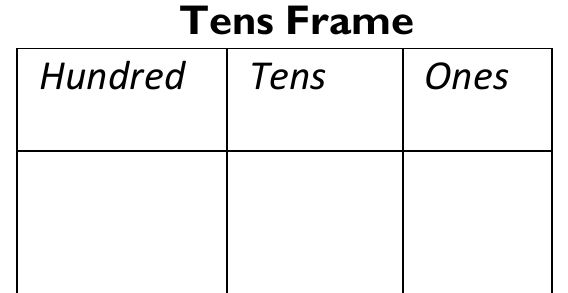
(Use other possible representations of place value which include manipulatives such as threaded 100s, 10s, and loose bottle caps; and multi-base ten material (units, flats and squares) with numeral cards
- decompose or partition numbers to 1000 into hundreds, tens and ones (e.g.: 153 = 100 + 50 + 3, or 153 = 100 + 53)
- explain why the value of a digit depends upon its placement within a numeral.
- read a number by indicating the value of each digit (i.e., reading 43 as forty-three and not four three.
E.g. 2. Partition or decompose numbers to 100 and then to 1000 into equivalent expressions (e.g.: 47 = 20 + 20 + 7, or 30 + 10 + 7, etc.)