B6 English Language · Term 3, Week 5
Narrative Writing
Lesson notes
Learning Objectives
Indicator: B6.4.10.1.1
By the end of the lesson, learners can:
- Identify the key features of reflective narrative writing, including the use of past and present tense to show change over time.
- Use a prewriting strategy (listing “how things used to be” and “how they are now”) to generate ideas for a reflective narrative.
- Write a short reflective narrative that tells a personal story of change, expressing feelings about the experience.
- Revise a draft by checking that the narrative moves clearly from the past situation to the present situation.
- Edit a piece of writing for basic punctuation, capital letters and spelling errors before publishing a final copy.
Sign in with your phone number to read the full note and download the GES plan - free.
Sign in with phone numberCurriculum details
- Strand
- Writing (Strand 4)
- Sub-strand
- Narrative Writing (4.10)
- Content standard
- B6.4.10.1 - Narrate situations, express feelings and convey point of view about the world/ or fictional world
- Indicator
- B6.4.10.1.1 - Narrate situations, express feelings and convey point of view about the world/ or fictional world The document prints this content standard with a full exemplar block but no indicator code or separate indicator text (pp 202-203); the standard text is carried as the indicator and the code assigned by verification.
- Suggested placement
-
Term 3, Week 5
(Week 29 of the year)
Our suggestion, laid out in curriculum order across three terms of twelve weeks. NaCCA does not fix the week, so follow your school's scheme of learning.
- Source document note
-
The official curriculum document has a fault in this entry, so the curriculum text above is transcribed exactly as printed:
- indicator text -
- Curriculum reference
-
English Language Curriculum (Basic 4-6), 2019, p. 203
Transcribed from the official NaCCA publication. Check this page against the source.
Exemplars (from the NaCCA curriculum)
Reflective Writing
A reflective writing explores who you are now and who you were before now. It focuses on a change you have experienced and reflects on how that change makes you unique.
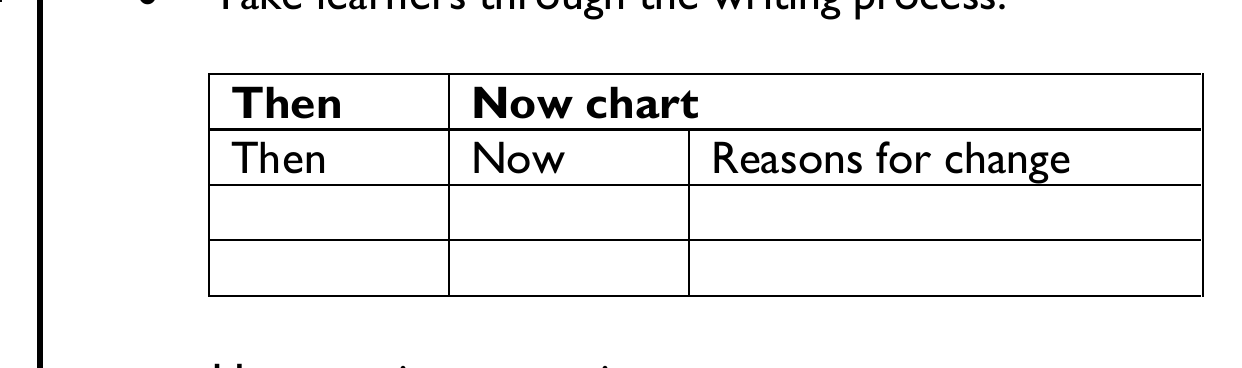
- Take learners through the writing process.
- Use questions to revise:
Prewriting - strategy
Make a list of how things used to be and how they are now. Tell why they changed. Continue with the rest of the process: Writing, Revising, Editing and Publishing.