JHS2 Creative Arts And Design · Term 1, Week 4
Drawing, Shading, Colouring and Modelling for Design
Lesson notes
Learning Objectives
Indicator: B8.1.2.1.1. By the end of the lesson, learners can:
- Identify and name at least five manual tools and materials used for 2-D drawing, shading and colouring, and state the purpose of each.
- Experiment with at least three shading techniques (hatching, cross-hatching, stippling or blending) using pencil on paper to show light and dark values.
- Create an original 2-D design that combines lines, simple shapes and forms, using a chosen shading technique and colour media.
- Present their finished 2-D drawing to the class, explaining the tools, materials and techniques they used and how they made their design choices.
- Give and receive constructive feedback on classmates’ 2-D drawings using simple criteria such as line quality, shape accuracy, shading and use of colour.
Sign in with your phone number to read the full note and download the GES plan - free.
Sign in with phone numberCurriculum details
- Strand
- Design (Strand 1)
- Sub-strand
- Drawing, Shading, Colouring and Modelling for Design (1.2)
- Content standard
- B8.1.2.1 - Design Demonstrate understanding and use of 2-D drawing, shading, colouring and modelling media and techniques for creative expression of design ideas.
- Indicator
- B8.1.2.1.1 - Explore available manual and digital tools, materials and techniques for 2-D drawing, shading and colouring to create designs from lines, simple shapes and forms.
- Suggested placement
-
Term 1, Week 4
(Week 4 of the year)
Our suggestion, laid out in curriculum order across three terms of twelve weeks. NaCCA does not fix the week, so follow your school's scheme of learning.
- Source document note
-
The official curriculum document has a fault in this entry, so the curriculum text above is transcribed exactly as printed:
- exemplars - p.40: both captions are clipped by the cell border in the document itself. The same figure is captioned 'Pencil holding and shading' / 'Shading and colouring techniques' on printed pp.7 and 69
- Curriculum reference
-
Creative Arts and Design, Common Core Programme (JHS1-JHS3), 2023, p. 39
Transcribed from the official NaCCA publication. Check this page against the source.
Exemplars (from the NaCCA curriculum)
1. Explore to determine and document the nature and suitability of available manual tools, materials and techniques for 2-D drawing, shading, and colouring for appreciation and reflection. E.g. of tools: T-square, set square, protractor/paper/cardboard/pencil.
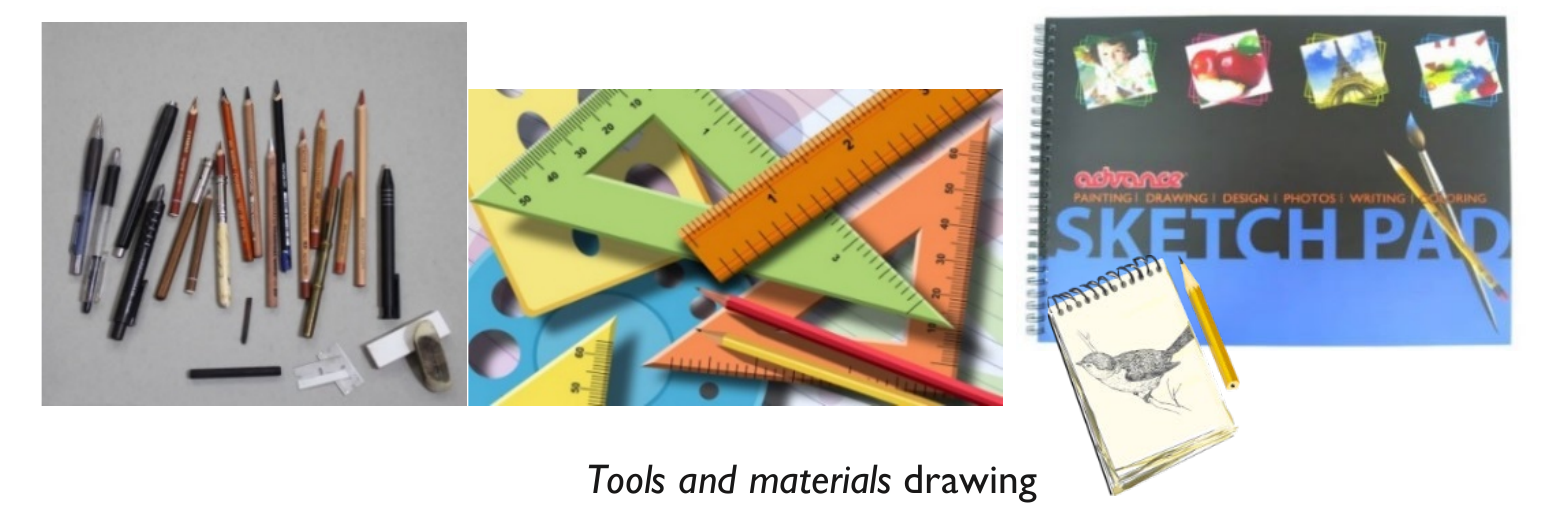
Tools and materials drawing
Source: Google.com
2. Identify, select and experiment the use of available manual tools, materials and techniques for freehand and 2-D drawing, shading and colouring to create designs from lines, simple shapes and forms for sharing and appraising. Ref. to YouTube videos: Start drawing Part 2-6: Drawing Shapes, Understanding Eye Level etc.
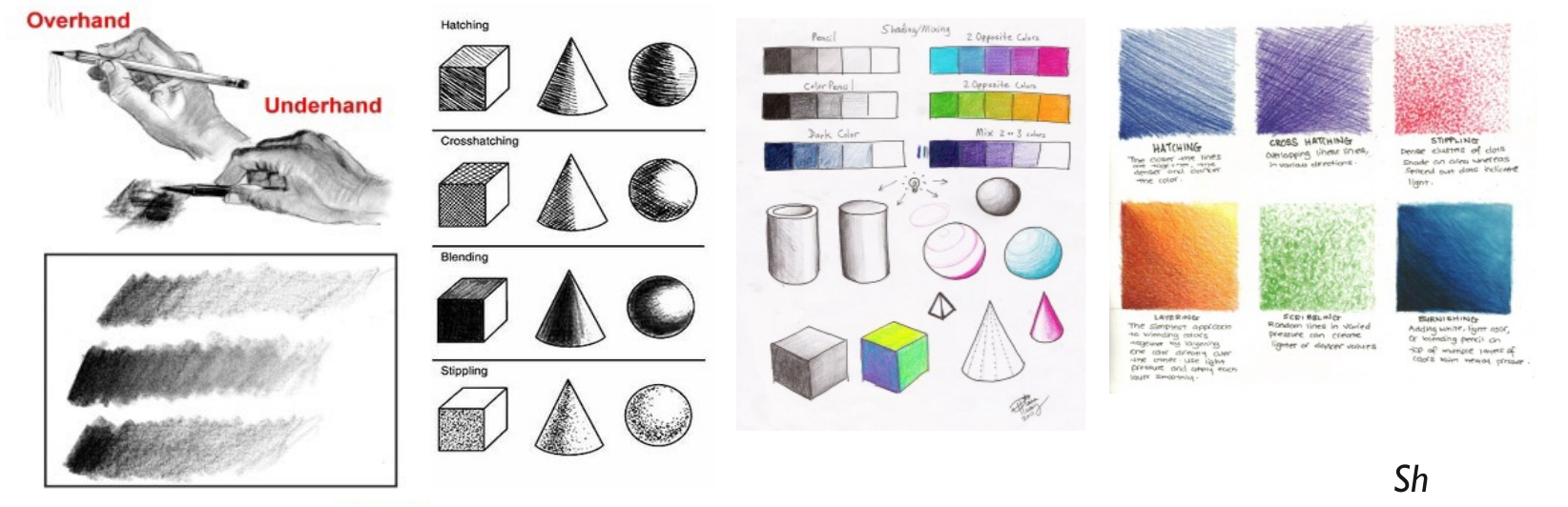
Pencil
Sh
3. Exhibit own 2-D drawings and colour work to share design ideas based on lines, shapes and forms for appreciation, appraising and feedback.