SHS1 History · Semester 1, Week 8
Nature and Scope of History
Lesson notes
Learning Objectives
Indicator: 1.1.1.LI.2 - Analyse the need for the study of History in Ghanaian schools.
By the end of the lesson, learners can:
- Explain at least three reasons why the study of History is necessary in Ghanaian schools, using evidence from their own environment and communities.
- Identify and describe at least five skills that students acquire from studying History, such as critical thinking, research, communication, and empathy.
- Analyse how the skills gained from studying History are useful for both individual development and national development in Ghana.
- Evaluate common arguments for and against the study of History in schools, and respond to them with reasoned justification.
- Demonstrate attitudes and values that History inculcates, such as tolerance, patriotism, honesty, and respect for diversity, through group discussion and role-play.
Sign in with your phone number to read the full note and download the GES plan - free.
Sign in with phone numberCurriculum details
- Strand
- Historical Inquiry and Writing (Strand 1)
- Sub-strand
- Nature and Scope of History (1.1)
- Content standard
- 1.1.1.CS.2 - Exhibit knowledge on the relevance of history to human survival and development. 1.1.1.LO.1 Use appropriate historical sources from the environment to communicate effectively the origins, nature and scope of history while demystifying common misconceptions associated with the study of history. 1.1.1.LO.2 Use relevant sources from the environment to communicate meaningfully the role of history in society.
- Indicator
- 1.1.1.LI.2 - Analyse the need for the study of History in Ghanaian schools.
- Suggested placement
-
Semester 1, Week 8
(Week 8 of the year)
Our suggestion, laid out in curriculum order across three terms of twelve weeks. NaCCA does not fix the week, so follow your school's scheme of learning.
- Curriculum reference
- NaCCA curriculum document, p. 33
Exemplars (from the NaCCA curriculum)
Enquiry Routes: Why is the study of History in schools relevant? What are the skills students acquire from studying History? How are the skills useful for individual and national development?
Project-Based Learning: Prepare a mind map on some critical skills history offers to individuals.
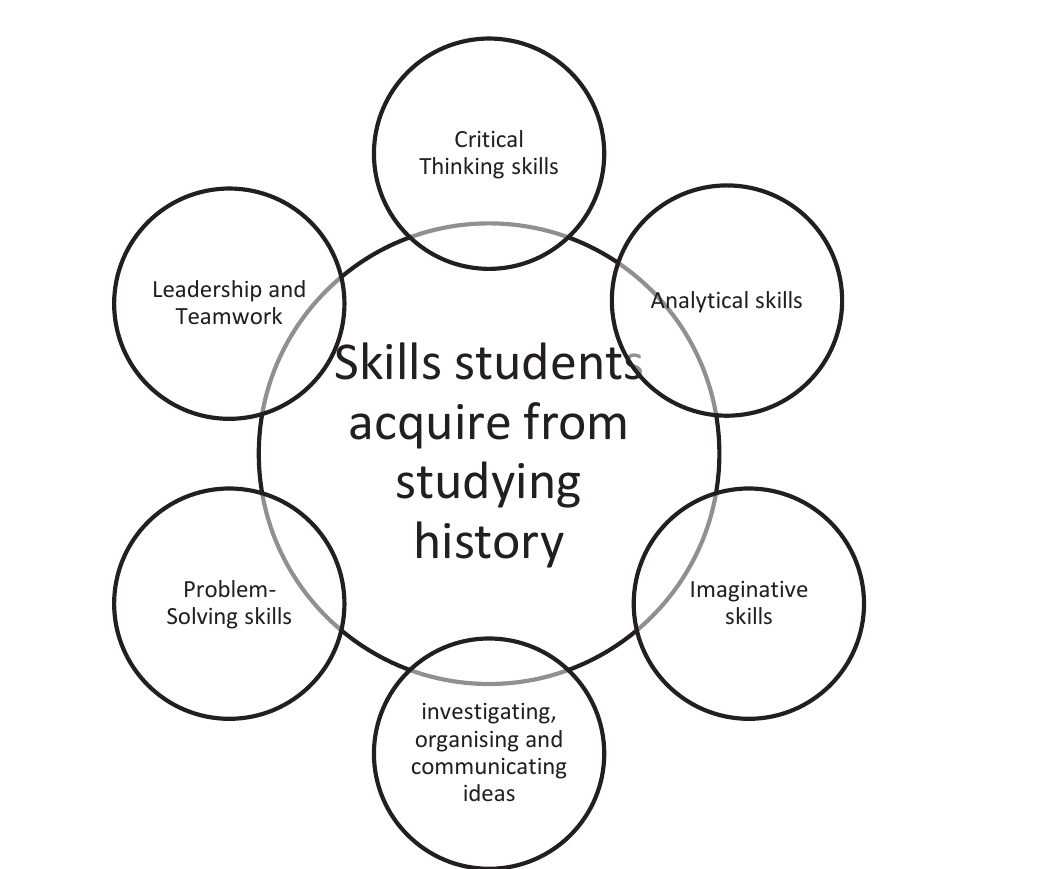
Experiential Learning:
- With the help of a Resource Person, learners discuss some job opportunities that History offers to individuals.
- In a mixed-gender group, learners discuss how skills acquired through the study of History can be useful to the individual and the nation.
- Learners role-play some attitudes and values (tolerance, patriotism, loyalty, honesty, cohesion, diversity, etc.) that History inculcates in students.
Problem-Based Learning:
- Learners debate why it is necessary to study history in Ghanaian schools.
- In a mixed-ability group, learners develop a poster to create awareness in your school on the need to study history in schools.
Teaching and Learning Resources:
- Primary Source data (birth certificates, old photographs, family album, health record Cards, Personal Diary)
- Excerpts of Community, Ethnic and national histories
- Internet access
- Documentaries and Speeches on patriotism.
- Computers/ laptops, LCD projector/screen, video/ audio player
- Resource person
- Stationaries
- Documentaries/ videos on the need to study History
Assessment (1.1.1.AS.2). The document marks these depth-of-knowledge levels for this indicator: Level 3 Strategic reasoning.