JHS1 Creative Arts And Design · Term 1, Week 2
Design in Nature and Manmade Environment
Lesson notes
Learning Objectives
Indicator: B7.1.1.1.2
By the end of the lesson, learners can:
- Research and identify at least three elements of design (dots, lines, and shapes) found in the natural environment around the school and home.
- Record examples of dots, lines, and shapes observed in the manmade environment using drawings, labels, or photographs.
- Explain in their own words how dots, lines, and shapes serve as building blocks for creative design expression.
- Create a simple pattern using at least two elements of design (for example, concentric circles or repeated lines of different sizes) and present it for class discussion.
Sign in with your phone number to read the full note and download the GES plan - free.
Sign in with phone numberCurriculum details
- Strand
- Design (Strand 1)
- Sub-strand
- Design in Nature and Manmade Environment (1.1)
- Content standard
- B7.1.1.1 - Demonstrate understanding of design as a concept in relation to the elements (dots, lines, and shapes) and principles (balance, rhythm, repetition) of design and as a medium for creative expression of design in nature and the manmade environment.
- Indicator
- B7.1.1.1.2 - Research to identify and record what constitutes the 'elements of design' in nature and as building blocks for creative expression of design ideas.
- Suggested placement
-
Term 1, Week 2
(Week 2 of the year)
Our suggestion, laid out in curriculum order across three terms of twelve weeks. NaCCA does not fix the week, so follow your school's scheme of learning.
- Curriculum reference
-
Creative Arts and Design, Common Core Programme (JHS1-JHS3), 2023, p. 3
Transcribed from the official NaCCA publication. Check this page against the source.
Exemplars (from the NaCCA curriculum)
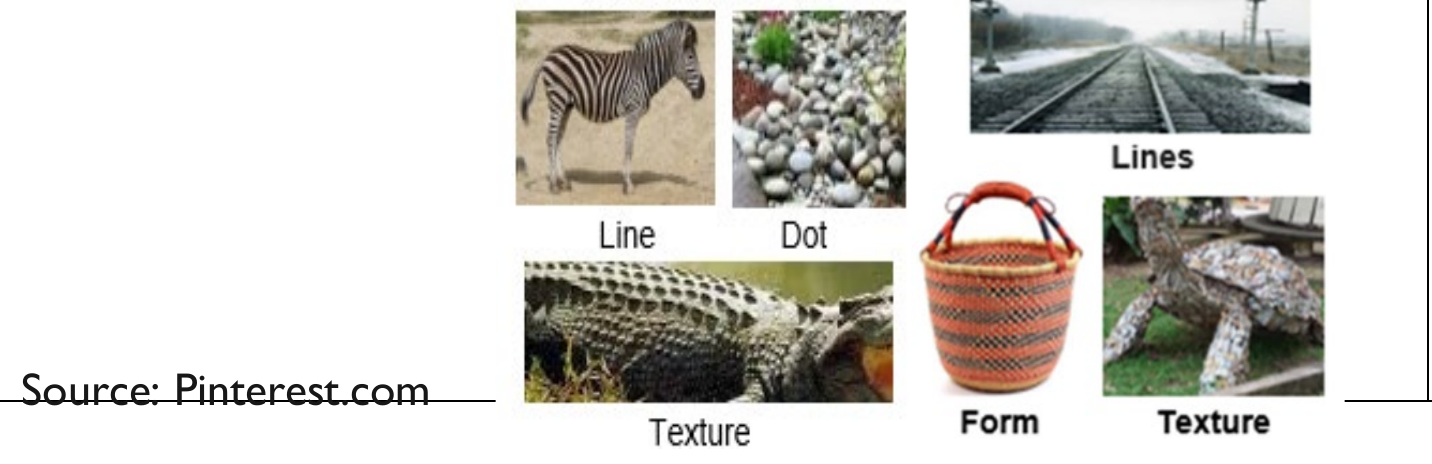
1. Research to deduce and record what constitutes the 'elements of design' and their application as building blocks for creative expression of design for reflection and discussion. Examples: dots, lines, shapes
Source: Pinterest.com
2. Explore the natural and manmade environments to identify and document examples of elements of design for reflection and discussion.
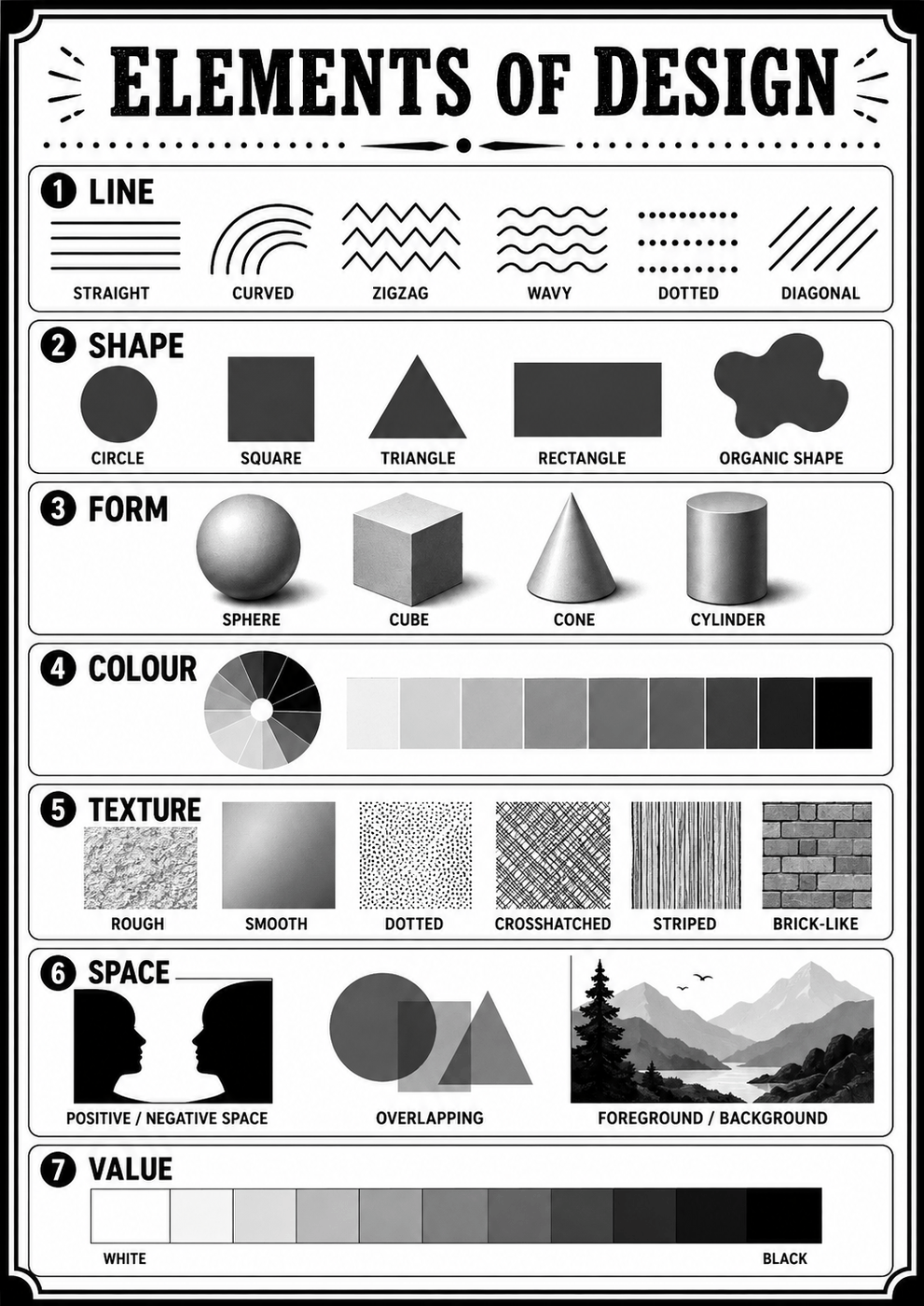
3. Reflect on knowledge gained from discussions to create patterns that reflect selected elements of design using available manual and digital tools, materials and techniques for display and sharing. Examples: patterns of lines and shapes; concentric circles; different sizes of dots.
Source: Google.com